
Is Journalism Documenting ICE — Or Inadvertently Helping It Operate?
We need to make sure the big questions don’t disappear along with the people taken away.

Journalism is too opaque and misunderstood. Chills gives a behind-the-scenes look at how dangerous investigative journalism gets made.
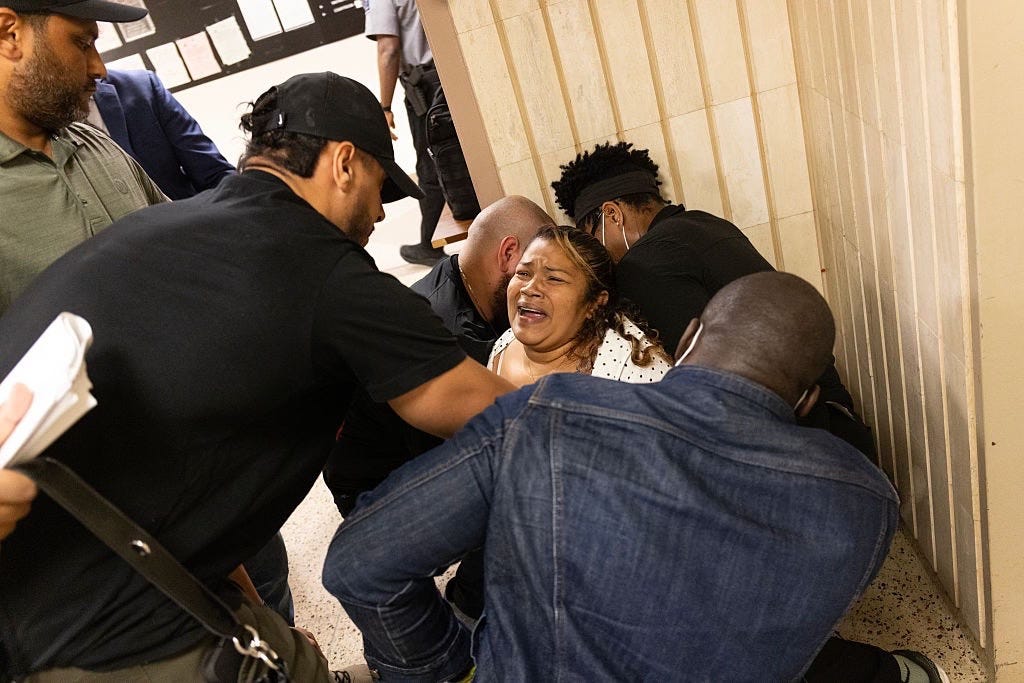
In recent months, coverage of ICE enforcement has split into two distinct modes. One treats raids as breaking news events to be tracked in real time. The other treats enforcement as a system whose effects unfold slowly, unevenly, and often out of sight. The difference between them is not tone or politics. It’s whether journalism is documenting power — or inadvertently helping it operate.
The importance of following consequences became clear to me during my years of reporting on a series of nearly 50 rapes of little girls in the small village of Kavumu in the Democratic Republic of Congo. In “How a Journalist Chases a Monster” and later follow-ups, I refused to treat the initial disclosures of violence as an endpoint. I stayed with the story, pressing authorities for accountability, documenting delays in the investigation, and tracing how survivors and their families were affected over months and years. That experience showed that the story is not just the event itself — it is what happens afterward, how systems respond or fail, and how people’s lives are altered by what unfolds in the days, weeks and months to come.
In the United States, there is a similar dynamic in ICE coverage. In August, video obtained by the Los Angeles Times showed a man being detained by ICE agents as he left the Clara Shortridge Foltz Criminal Justice Center in downtown Los Angeles. Plainclothes officers surrounded him on the courthouse steps, lifted him by the arms and carried him toward an unmarked vehicle as he pleaded for help. Public defenders and judges quickly warned that courthouse arrests like this discourage people from appearing for hearings at all.
The video did what journalism is meant to do: It made enforcement visible. In a moment when the administration repeatedly tells the public not to believe what they can see, documenting individual events is critical. Photographs, video and eyewitness reporting create a record that resists denial and erasure, anchoring public understanding in observable fact.
The first mode is familiar to anyone who follows local news. A tip comes in. Reporters rush to a courthouse, an apartment complex, a worksite. Broadcast TV helicopters circle. Digital desks send push alerts: “ICE activity reported downtown.” Live blogs update readers on where agents were last seen, how many vans are present, which streets are blocked.
This kind of coverage is considered by many to be a public service. It gives activists time to mobilize. It warns families. It makes enforcement visible. All of that can be true. But the format matters.
Real-time location reporting turns enforcement into an event stream — something to monitor minute by minute — without naming who ordered the action, why it’s happening now or what happens to the people taken once the cameras leave.
It also creates a feedback loop. Enforcement agencies can see which tactics draw cameras, how quickly information spreads and which locations provoke public reaction. In that sense, coverage becomes part of the environment enforcement operates in, even when the intent is accountability. The story ends when the vans pull away, leaving behind fear, confusion and no public accounting — much like the unanswered questions surrounding the man detained outside the Los Angeles courthouse.
You can see an alternative in slower reporting that refuses spectacle. ProPublica’s investigations into immigration enforcement rarely lead with the raid itself. Instead, they reconstruct what happens after: how detainees are transferred across state lines, how families search for them through detention centers and court records, how databases and interagency agreements make those disappearances possible. The stories arrive days or weeks later, but they name decision-makers, contracts and policy directives. Readers learn how the machine works, not just when it passes by.
Local nonprofit newsrooms have taken similar approaches. Outlets like the Texas Tribune have focused on tracking detainee transfers and enforcement priorities rather than broadcasting live arrest locations. In the Pacific Northwest, reporters at KUOW have followed what happens to people after arrest through bond hearings and jail rosters rather than competing to be first with tactical details. In these stories, absence becomes the point. People are taken, and then they vanish into a bureaucratic maze designed to resist scrutiny.
There’s also a difference in sourcing. Event-driven coverage leans heavily on law enforcement statements, often the only voices available in the moment. Structural coverage treats those statements as one data point among many, weighed against court filings, internal memos and testimony from lawyers and families once it’s safe to speak. The imbalance of access is acknowledged rather than papered over with “both sides” language.
None of this is an argument for silence. It’s an argument for recognizing journalism’s advantages.
Real-time documentation matters — especially in a moment of official denial — but it only becomes accountability when journalists stay long enough to explain who made the decision, where people were taken, and what the enforcement leaves behind.
Activists intervene in the moment. Journalism, at its best, slows the moment down long enough to assign responsibility. The video outside the Los Angeles courthouse showed what enforcement looks like. The harder task — and the one journalism is uniquely equipped to do — is to follow what happens next, and to make sure those questions don’t disappear along with the people taken away.
Chills is self-funded, without ads. If you want to be a part of this effort, of revealing how difficult reporting is made — of sending me to places like Ukraine to report for you — I hope you will consider subscribing for $60/year or $6/month.
There are so many people being taken away! What an infinite task.
thanks for this, about follow up on stories of ICE.